Vegetables
Green leafy vegetables, cruciferous vegetables, root vegetables, and seasonal produce. Learn about storage, preparation methods, and composition profiles.
Educational information about common ingredients, their composition, sourcing, and seasonal availability in Australia.
Green leafy vegetables, cruciferous vegetables, root vegetables, and seasonal produce. Learn about storage, preparation methods, and composition profiles.
Seasonal fruits, berries, tropical options, and preserved fruits. Educational information about when they're available and how to select quality.
Whole grains, pseudo-cereals, and seeds. Understand preparation, composition, and how different grains function in meal planning.
Fish, poultry, meat, legumes, and plant-based options. Learn sourcing, storage, and composition characteristics.
Milk products, alternatives, and fermented options. Understanding different types and their roles in meal composition.
Oils, condiments, spices, and shelf-stable ingredients that support everyday cooking and meal preparation.
Australian seasonal availability (Southern Hemisphere). Eating seasonally supports both flavour and value.
Look for bright colour, firm texture, and absence of blemishes. Produce should feel heavy for its size, indicating freshness.
Fresh produce has natural aroma. Gently squeeze to check firmness—not too soft, not rock hard. Trust your senses.
Cool, dark places for root vegetables. Refrigerator for most produce. Separate ethylene producers (tomatoes, avocados) from sensitive items (leafy greens).
Leafy greens last 3–7 days. Root vegetables last 2–4 weeks. Plan meals accordingly to minimise waste.
General educational categories. This is informational reference, not medical or therapeutic guidance.
| Category | Examples | General Role | Storage |
|---|---|---|---|
| Leafy Greens | Spinach, lettuce, kale, silverbeet | High volume, low calorie, nutrient-dense | Refrigerator, 3–7 days |
| Cruciferous | Broccoli, cauliflower, cabbage, Brussels sprouts | Substantial, versatile, long storage | Refrigerator, 1–2 weeks |
| Root Vegetables | Carrots, beets, parsnips, turnips | Long shelf life, good for bulk prep | Cool, dark place, 2–4 weeks |
| Whole Grains | Brown rice, oats, barley, quinoa | Caloric foundation, long storage | Cool, dry place, months |
| Legumes | Lentils, beans, chickpeas | Protein-rich, budget-friendly, versatile | Cool, dry place, 6–12 months |
| Proteins (Fresh) | Fish, poultry, meat, eggs | Protein & micronutrient density | Refrigerator, 3–5 days (or freeze) |
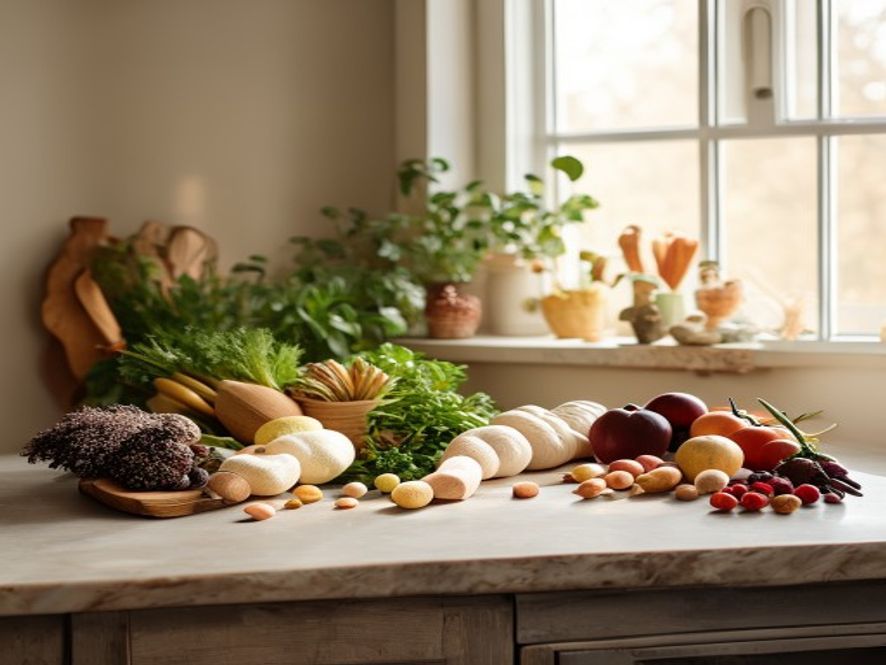
A well-stocked pantry supports flexible meal preparation. You don't need extensive variety—focus on quality staples you use regularly.
Pantry foundation: oil, salt, basic spices, rice or pasta, beans, nuts, vinegar, and condiments. These form the basis for countless meals.
Refrigerator staples rotate seasonally. Build shopping lists around what's available and what your plan requires.
This is a personal choice. Organic and conventional produce both offer nutritional value. Focus on eating more produce overall rather than on sourcing method alone. Fresh produce of any sourcing is generally preferable to highly processed options.
Wash produce under running water. Scrub firmer vegetables. For leafy greens, wash gently and dry well. No special soaps or treatments needed—water and simple handling is sufficient.
Some produce freezes well (berries, leafy greens, vegetables for cooking). Others (tomatoes, lettuce for salads) don't maintain quality. Frozen produce retains nutritional value and reduces food waste if you can't use fresh quickly.
Use this ingredient reference with your personalised meal plan for optimal results.
Get Your Plan